If you need basement waterproofing in Bloomington, IN, the ground under your house is part of the story. South-central Indiana is karst country: the bedrock is soluble limestone, rain soaks into cracks and channels in that rock, and sinkholes dot the fields and yards across Monroe County. Pair that with steep lots, clay-rich soil sitting on top of the stone, and storms that dump inches of rain in an afternoon, and it is easy to see why so many local basements take on water.
Bloomington Basement Waterproofing is a referral service. Tell us what you are seeing, and we pass your request to an independent waterproofing contractor who works in Bloomington and the surrounding towns. Call (317) 798-0634 or use the form.
Why Bloomington Basements Get Wet
Water that follows the hills
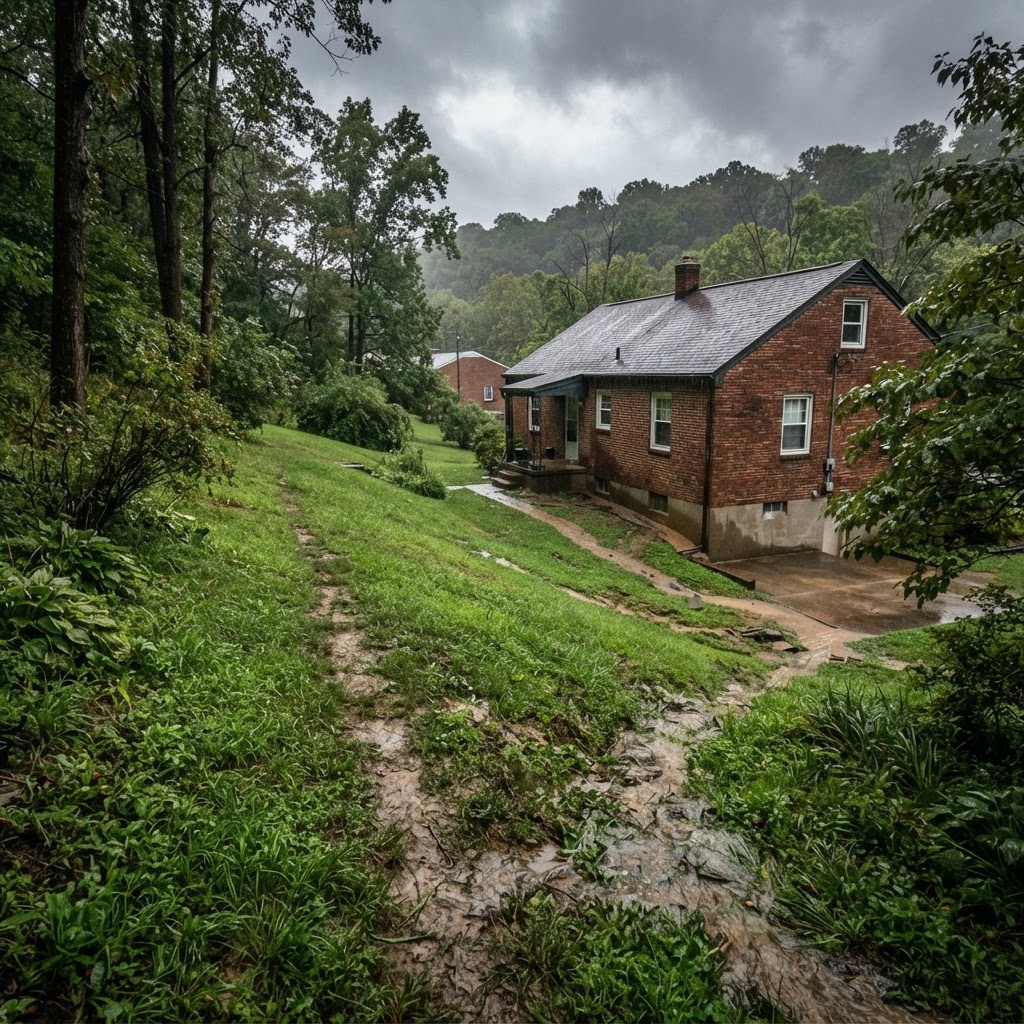
Much of Bloomington is built on rolling ground. Houses on the east side, around the lake roads and in the older neighborhoods near campus often sit below a slope. When a summer thunderstorm hits, sheet runoff heads straight for the uphill wall. If gutters overflow or the yard pitches the wrong way, that wall stays soaked for days.
Karst and sinkholes
Limestone dissolves slowly in slightly acidic rainwater. Over thousands of years that creates sinkholes, swallow holes and hidden voids. Most of the time this is a drainage feature, not a crisis, but a sinkhole on or near a lot can concentrate water in one spot, and a filled or plugged sinkhole can settle. If your property has a depression that ponds after rain, mention it when you request a quote. The Indiana Geological and Water Survey, based at Indiana University, publishes karst maps the public can browse.
Clay soil over rock
The soil layer above the limestone is often clay-heavy and fairly thin. Clay holds water and swells, then shrinks in dry spells. That cycle pushes on basement walls, opens cracks and lets water sit against the foundation instead of draining away.
Older foundations
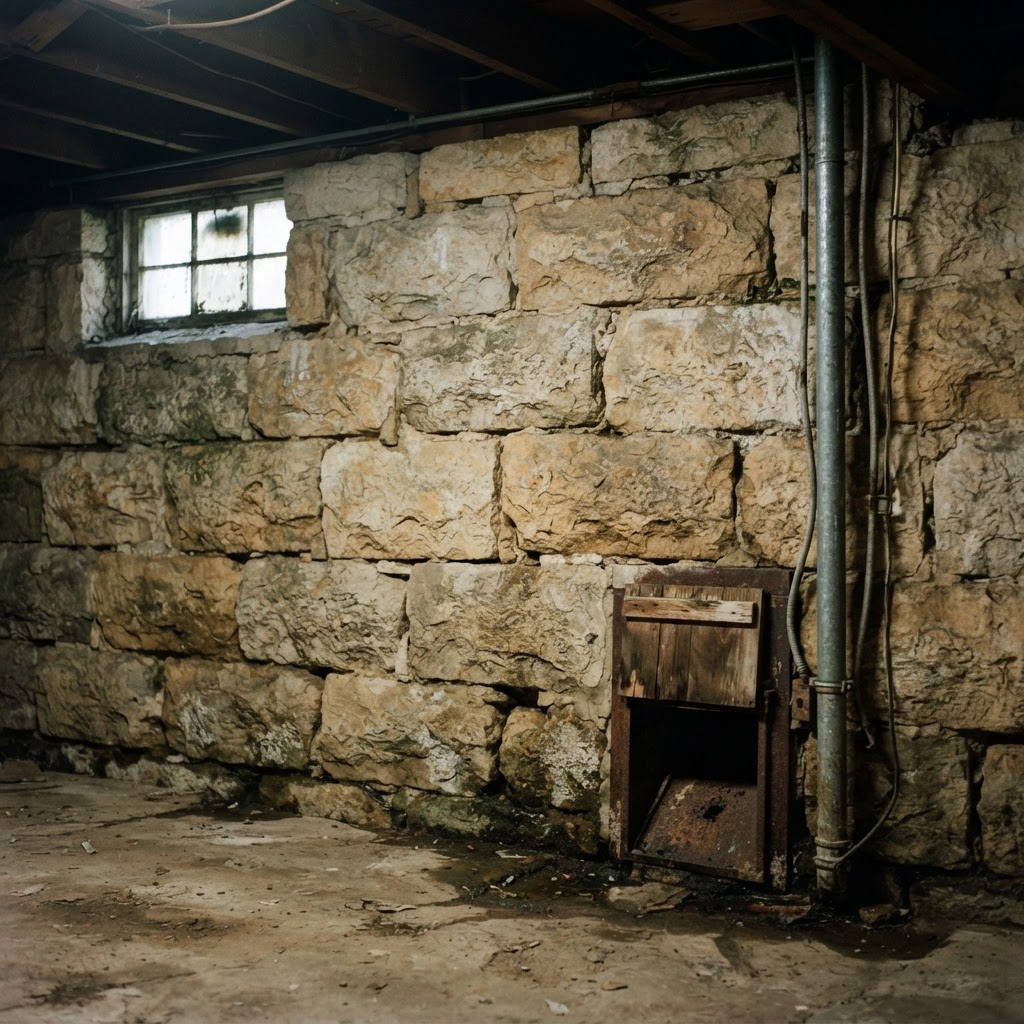
Some of the city's older homes have stone, block or early poured walls. Block cores fill with water, mortar joints erode, and original clay drain tile, where it exists, can be crushed or clogged after decades.
What a Local Waterproofing Pro Can Do
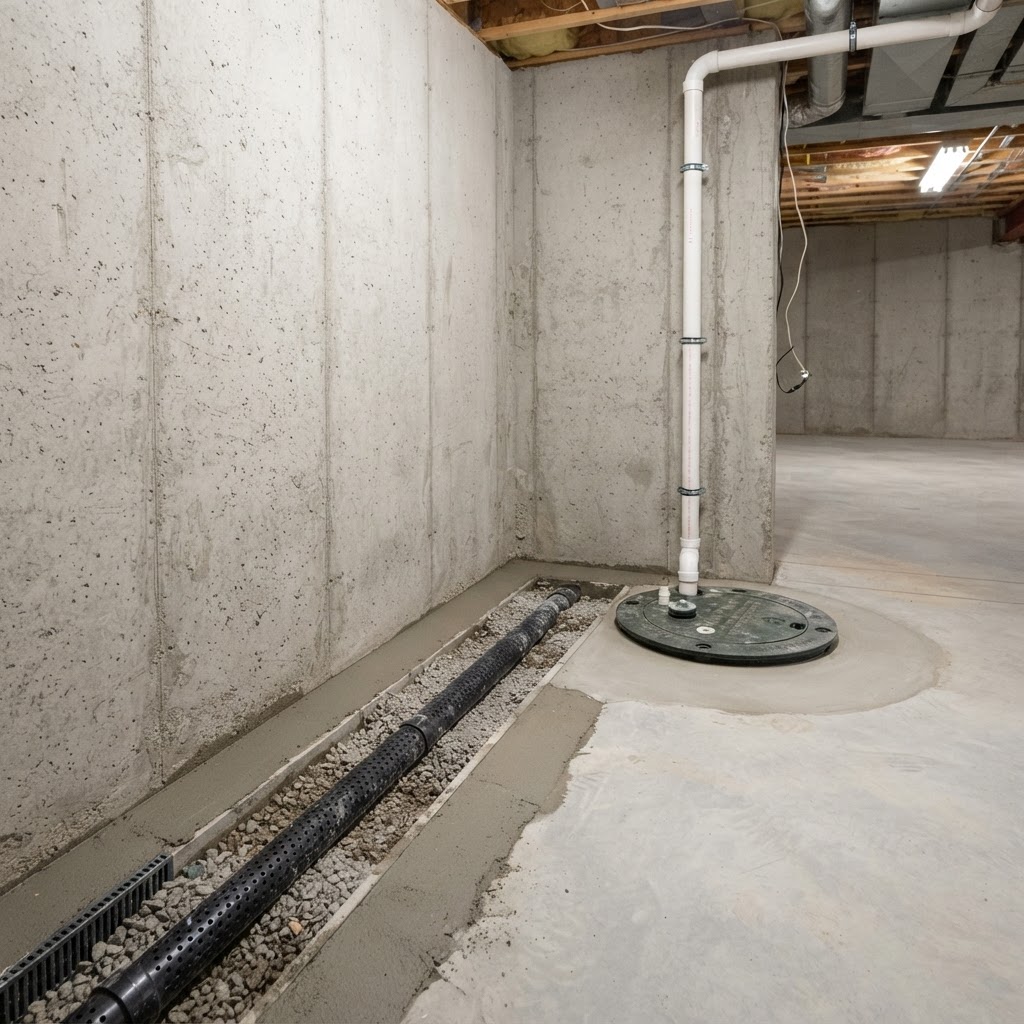
- Interior drain tile and sump systems to collect seepage at the base of the walls and pump it out. Learn more
- Exterior excavation and membranes where the outside of the wall is reachable and the problem is severe.
- Leak tracing and repair for a single wet corner, a window well or a pipe penetration. Wet basement repair
- Crack sealing with polyurethane or epoxy injection, plus a referral to a structural fix if a crack is moving. Foundation crack repair
- New sump pits, replacement pumps and battery backups. Sump pumps
- Crawl space vapor barriers, drainage and dehumidifiers. Crawl spaces
How It Works
- Send the form or call. Describe where the water shows up and when (every rain, only spring, only after big storms).
- We pass it along. Your request goes to an independent local contractor, usually the same business day.
- On-site inspection. The contractor looks at the walls, floor, grading, gutters and any sump already in place and explains what they think is happening.
- Written estimate. You decide whether to go ahead. There's no obligation to us.
What Does Waterproofing Cost Around Bloomington?
HomeGuide's basement waterproofing cost guide puts interior waterproofing at roughly $6,000 to $12,000 and exterior waterproofing at roughly $10,000 to $18,000 nationally. Its sump pump installation guide lists $600 to $2,500 installed, and non-structural crack injection runs about $250 to $800+ per crack per its foundation crack repair guide. Those are national figures. Your price depends on wall length, foundation type, how much rock or clay the crew digs through, and whether the basement is finished. Only an on-site estimate gives you a real number.
Before You Call: Quick Checks
- Walk the house in a hard rain. Look for overflowing gutters and downspouts emptying right beside the wall.
- Notice whether water shows up along the floor edge (groundwater pressure), mid-wall (cracks) or near windows (wells and grading).
- Check whether the basement smells musty even when dry. That points to humidity as well as leaks.
- If you have a sump, pour a bucket of water in and confirm it kicks on.
Permits
Some waterproofing work, especially exterior excavation, new drainage connections or structural wall repair, may need a permit. Requirements differ between the City of Bloomington and unincorporated Monroe County, and neighboring counties set their own rules. Your contractor should confirm what applies to your address; we can't promise either way.
Frequently Asked Questions
Dry out your Bloomington basement before the next storm.
Call (317) 798-0634 or send the form and a local waterproofing contractor will follow up.